Amsterdam Canals for MICE Events


The Amsterdam Canal Ring, in Brief
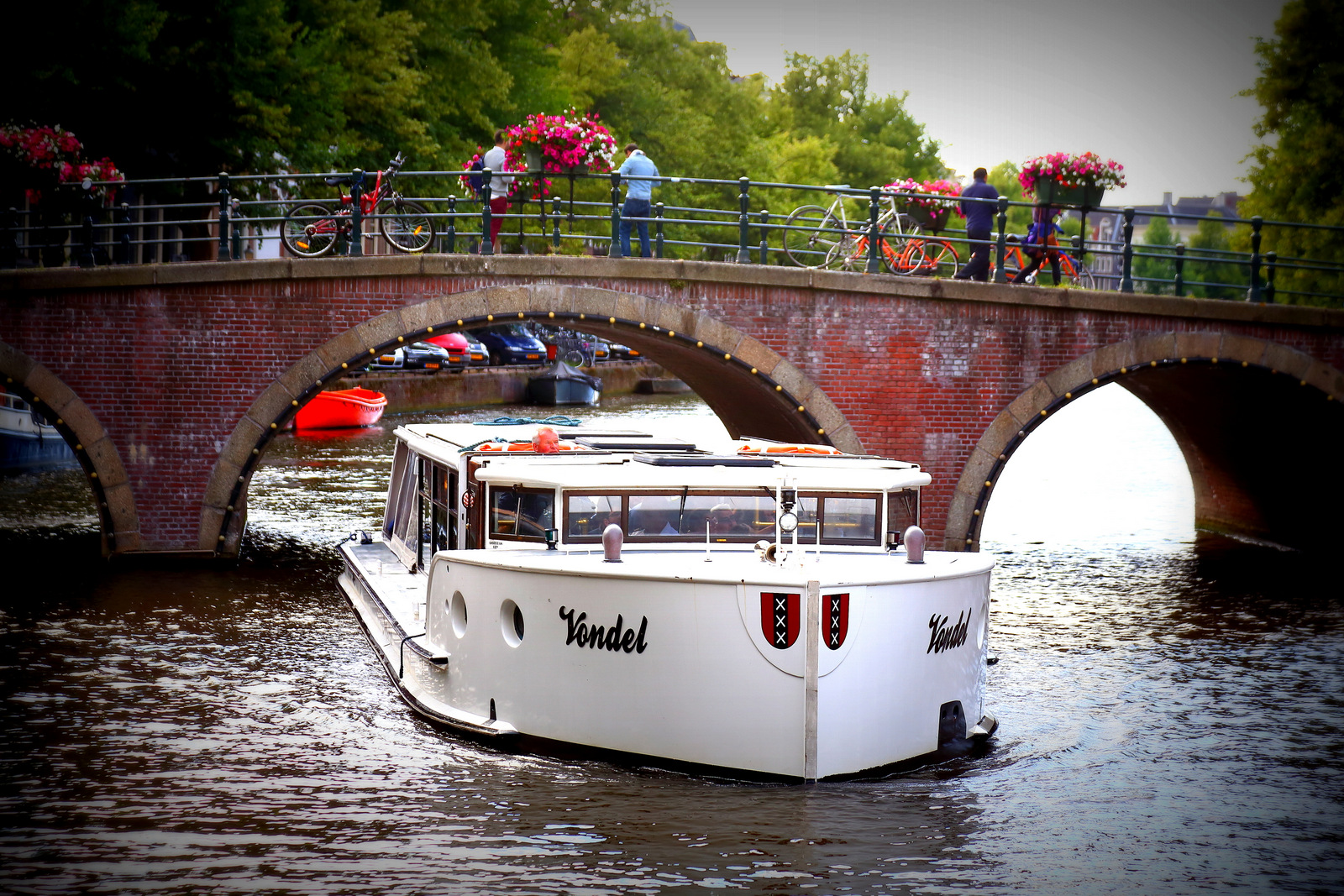
The Amsterdam Canal Ring is one of the city’s most defining features. It was built in the 17th century, during the Dutch Golden Age, when Amsterdam grew into one of the world’s great trading capitals.
What began as a practical expansion of the city became something far more elegant.
Land outside the old city walls was reclaimed and shaped into waterways. Then came the merchants. The spice trade. The wealth. The canal houses. Plot by plot, facade by facade, the city built the image many people still carry with them today: narrow gabled houses, arched bridges, quiet water, and light moving across brick.
Today, the canal ring is UNESCO-protected. And for good reason.
The network includes 165 canals, stretches for roughly 50 kilometers, and is tied together by more than 1,200 bridges across the city. It is both historic infrastructure and living space. Not preserved behind glass. Still in use. Still moving.
That is part of its appeal.
You do not just look at the canals. You enter them. You travel through them. You let them shape the mood of the day.
Why the Canals Work So Well for MICE Programs
Not every city gives you this.
A city-center transfer that feels private. A reception that moves. A dinner with house fronts sliding past the windows. A CSR activity that happens on the water itself. In Amsterdam, these things are not add-ons. They are natural extensions of the place.
The canals work especially well for MICE programs because they combine three things at once:
Atmosphere
You step on board and the pace changes. The city softens. Traffic drops away. Conversations lengthen. People look up from their phones. They notice things.
The water does that.
Practicality
Many hotels and venues in Amsterdam either have their own jetty or are close to one. That means a cruise can be more than a scenic extra. It can move guests from hotel to dinner, from conference venue to reception, from one part of the evening to the next.
Useful. Memorable. Both.
Flexibility
The canals can hold different kinds of moments. Quiet sightseeing. Drinks before dinner. Fine dining. Team challenges. CSR. Small executive gatherings. Larger incentive groups split across multiple vessels.
Different formats. Same city. Same water.
The Main Ways to Use the Canals in Your Program
There is no single canal experience. That is the point.
Some groups want a gentle introduction to the city. Some need a stylish transfer with drinks on board. Some want a high-touch evening for top performers. Others want an activity that gets people working together.
We usually think about canal use in a few clear formats:
- sightseeing cruises
- hotel-to-venue transfers
- drinks cruises
- lunches and dinners on board
- CSR activities
- team-building experiences
From there, the right vessel matters.
A lot.
The Three Main Types of Event Boats in Amsterdam
Not every boat fits every brief.
And not every guest experience should feel the same.
We generally divide event vessels into three categories. Each has its own strengths. Each serves a different kind of moment.
Type 1: Glass-Roof Canal Boats
Best for sightseeing and simple transfers
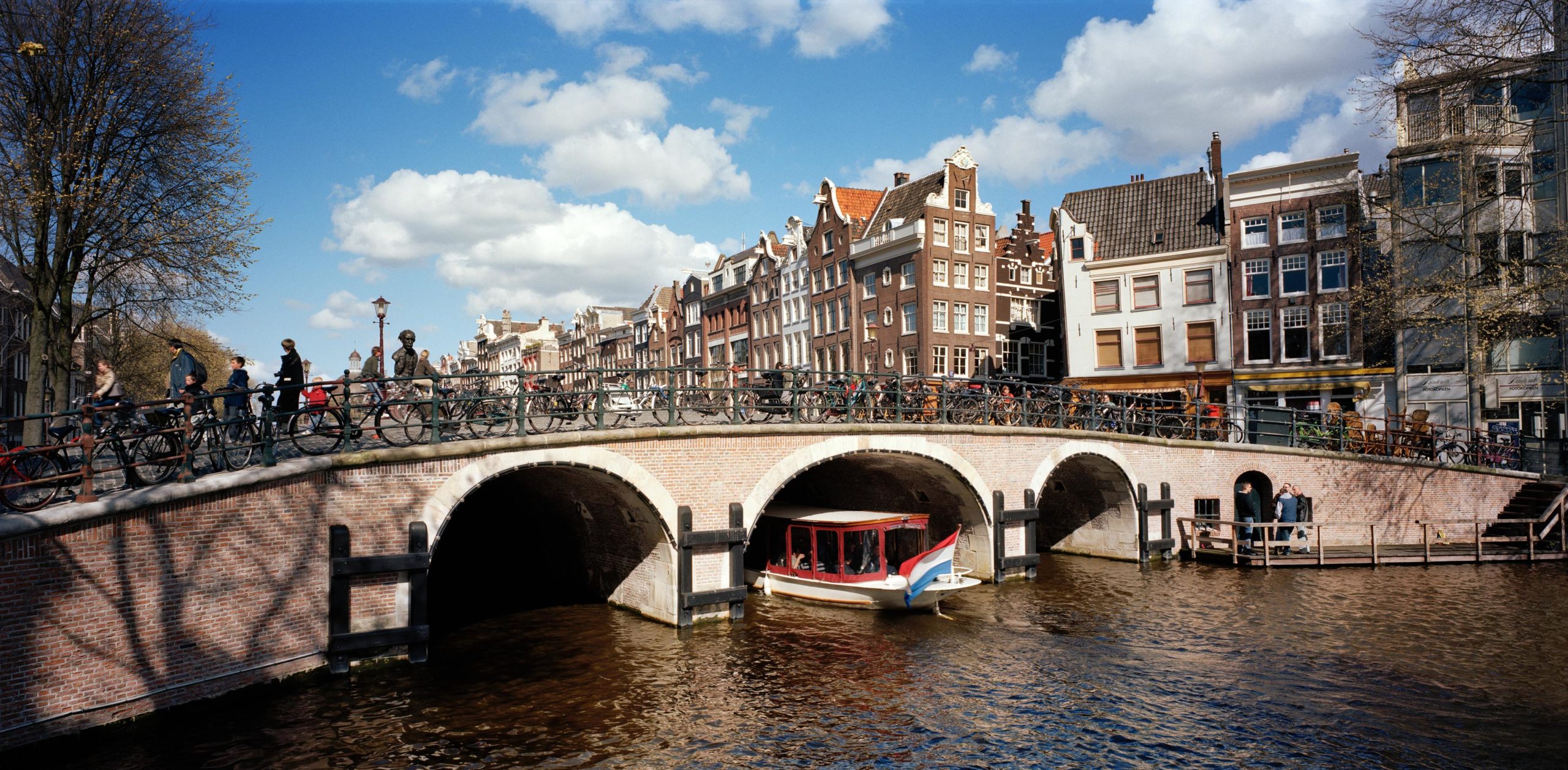
This is the classic Amsterdam canal boat. The one most people picture first.
With a glass roof and wide windows, these boats are made for viewing the city. They work well for orientation tours, first-day introductions, and A-to-B transfers where the focus is on the route, the story, and the scenery.
You sit down. You look out. Amsterdam passes by.
For groups, these boats become interesting from around 25 guests onward, when private hire often starts to make more sense than joining a public departure. Depending on the supplier, interiors may be fixed or partly adaptable. Capacities vary, with some boats going up to around 80 guests with fixed seating.
Catering is usually possible too. Drinks. Snacks. Canapés. Sometimes full dinners.
And this is where honesty matters.
You are not booking a Michelin-level dining room on a glass-roof canal boat. You are booking a practical, atmospheric way to combine movement, city views, and acceptable onboard catering. In recent years, food quality on these boats has improved. Considerably. It is often better than guests expect. Still, the real strength here is not culinary theatre.
It is the view.
The route.
The introduction to Amsterdam.


Type 2: Converted Freight Barges and Larger Cruise Boats
Best for drinks cruises and social transfers
These are some of our favorite vessels for receptions on the water.
Many of them began life as working boats and now serve as character-filled event spaces. You feel that history in the woodwork, the shape of the vessel, the bar setup, the sense of solidity underfoot.
They are warm. Lived-in. Full of charm.
For MICE groups, these boats are especially useful for pre-dinner drinks cruises. Guests board near the hotel, take in the city over an hour or so, enjoy drinks and canapés, and arrive at the dinner or gala venue already in the mood.
That transition matters.
A good event does not begin at the door of the restaurant. It begins earlier. On the coach. In the lobby. Or, in Amsterdam, on the water.
These vessels often have covered areas, and some include retractable roofs in good weather. They can also host lunches and dinners, though they are particularly strong for flowing, social formats with people standing, circulating, and talking.
One practical note. An important one.
Supplier capacities often reflect the legal maximum, not the most comfortable guest count. For drinks cruises, we usually plan a little below the published number. Space matters. Comfort matters. What we notice, your guests notice.
For larger groups, these vessels work very well across multiple boats. We have used them for events of up to 400 guests, split smartly and managed closely.
It works beautifully when done right.


Type 3: Classical Saloon Boats
Best for executive groups and high-end incentives
These are the boats people remember.
Not because they are loud. Because they are rare.
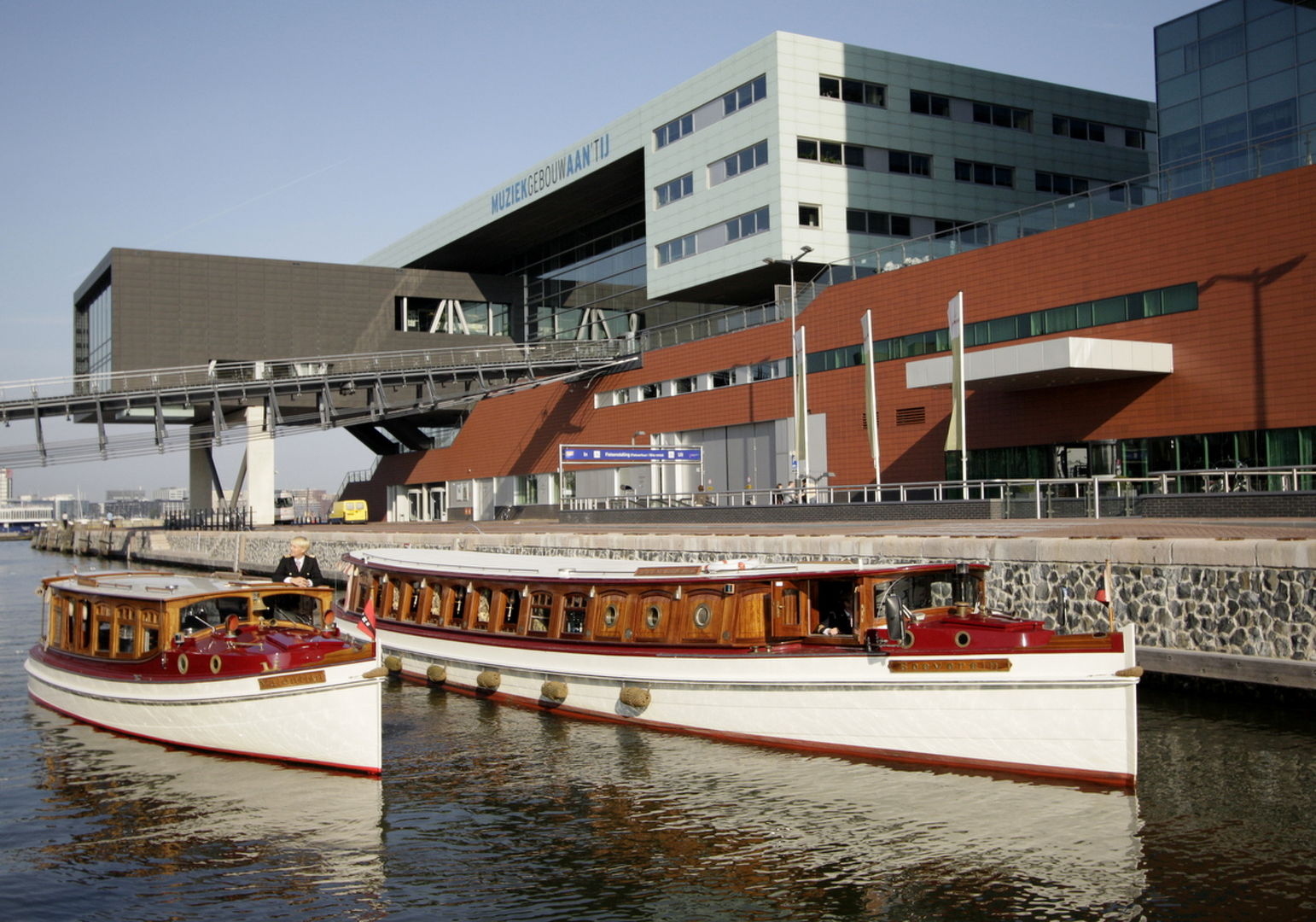
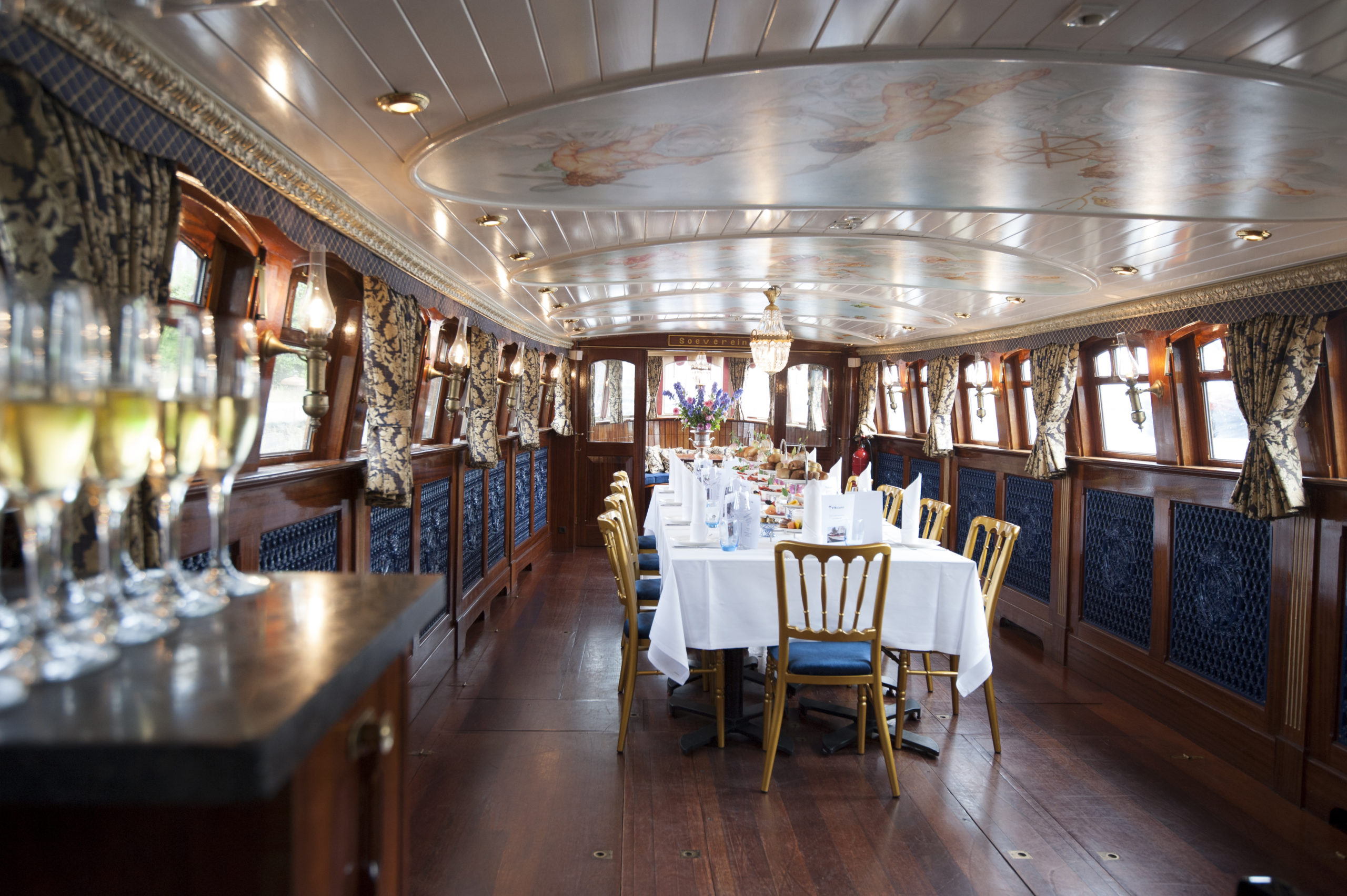
A classical saloon boat gives you a different kind of canal experience. More intimate. More refined. More private. Polished wood. Soft light. Quiet service. The kind of setting where champagne feels natural, not staged.
These vessels are ideal for smaller senior groups, VIP hosting, hosted dinners, or incentive moments where the experience needs to feel personal and hard to replicate.
That is their strength.
Capacities usually range from around 12 to 50 guests, depending on the vessel. Rental costs are higher than for Types 1 and 2, but so is the quality of the experience. And more to the point, so is the feeling.
For the right group, that feeling is the whole point.
We have seen these boats used for cocktail cruises with matched catering, elegant hosted dinners, and highly bespoke evenings with chefs preparing multi-course meals on board. Not every program needs this level. Some absolutely do.
When it fits, it fits perfectly.
Beyond Cruises: Other Ways to Use the Canals
The canals are not just for passive viewing. They can also be active. Social. Purposeful.
That opens the door to experiences that feel less like transport and more like participation.
CSR on the Water: Plastic Fishing
CSR has become a more meaningful part of MICE design. Not as a box to tick. As something groups increasingly want to do well.
One canal-based option we like is plastic fishing.
Guests board open boats made from recycled plastic and head out onto the canals with nets and collection bags. Before departure, there is a briefing on plastic waste, urban waterways, and the role people can play in reducing environmental impact. Then the activity begins.
And yes, it becomes competitive quickly.
Teams scan the water, lean over the edge, spot floating plastic near the quay, and call to one another when they find more. What starts as a sustainability briefing often turns into real energy. Real laughter. Real engagement.
It is useful. It is visible. It leaves the canals better than you found them.
A good CSR activity should do more than sound worthy. It should hold attention. This one does.

Canal Bikes
Not for winter. Very much for spring and summer.
Canal bikes are light-hearted, easy to understand, and surprisingly effective as a group activity. Usually, four guests share one bike, with two people pedaling and two taking in the view. It tends to create its own dynamics very quickly. Couples pair up. Colleagues negotiate who pedals. The city becomes the playing field.

It is simple. That is part of the fun.
This format works especially well as a team challenge when combined with questions, checkpoints, or themed assignments related to Amsterdam or the client itself. Add a pause for a local treat along the way, and the whole thing takes on more shape.

Not formal. Not polished. Just enjoyable.
And sometimes that is exactly what a program needs.
Open Boat Challenges with iPad Navigation
For groups that want something interactive, this format works very well.
Guests are divided into teams and step onto private open boats, usually with 7 to 9 guests per vessel. On board, there are drinks, snacks, and an iPad-based route challenge. Teams move through the canals while answering questions, solving riddles, completing mini-games, and taking photos along the way.
Only correct answers unlock the next waypoint.
That structure changes everything.
People stop being passive passengers. They become navigators, problem-solvers, negotiators, and occasionally very confident readers of entirely wrong maps. Which, in practice, is often where the fun begins.
You still get the city. You still get the views. But you also get momentum. Shared decision-making. Shared mistakes. Shared wins.
That is what people remember.
How to Choose the Right Canal Experience
Not the most expensive boat. Not the most elaborate route. The right fit.
That is the real question.
When choosing a canal experience for a MICE group, we look at a few things first:
Group size
Some formats suit 20 guests. Some suit 200. Some suit 400 if the logistics are right and the fleet is managed carefully.
Purpose
Are you welcoming guests? Moving them? Rewarding them? Feeding them? Asking them to collaborate? The purpose shapes the vessel, the route, the timing, and the onboard setup.
Time of day
Morning sightseeing feels different from sunset drinks. A lunch cruise is not an evening reception. Light matters. Energy matters. Amsterdam changes by the hour.
Season and weather
The canals are beautiful year-round, but not every activity works in every month. Open boats and canal bikes sing in warmer weather. Covered vessels bring comfort when temperatures drop.
Guest profile
A senior leadership group may want intimacy and privacy. A wider incentive group may want energy and movement. What we choose, you feel.
That is why planning matters.
The Canal Ring as a Living Part of the Event
The best canal moments do not feel inserted. They feel inevitable.
A guest leaves the hotel and steps onto a boat just as the light begins to fade. A glass is poured. A bridge appears ahead. The group quiets for a second, then starts talking again. Not because someone asked them to network. Because the setting made space for it.
That is what the canals do well.
They create transitions. Between day and evening. Between meeting and dinner. Between obligation and enjoyment. They make people feel in Amsterdam, not simply transported through it.
For MICE programs, that distinction matters.
You can book a venue anywhere. You can schedule dinner anywhere. But not every city gives you a UNESCO-listed waterway as part of the guest journey. Not every city lets history, movement, hospitality, and atmosphere sit in the same frame.
Amsterdam does.
Final Thoughts
The canals are one of Amsterdam’s greatest assets for meetings, incentives, conferences, and events. Not because they are famous. Because they are useful. Beautiful, yes. Historic, yes. But also deeply practical when used well.
A sightseeing cruise can orient a group.
A drinks cruise can set the tone.
A saloon boat can elevate a small executive evening.
A CSR activity can add purpose.
A challenge on the water can bring people together.
Different formats. Same water. Same city.
If you are building a program in Amsterdam, the canals deserve real thought. Not as decoration. As design.
Used well, they change the pace of a day.
Used well, they change how a city is felt.
That is the difference.
And that is why we keep returning to them.
Images courtesy of the venues featured, unless stated otherwise. Questions about an image? Contact us at info@performancetravel.nl.